
CRAFT PROCESS
From Fiber to Yarn
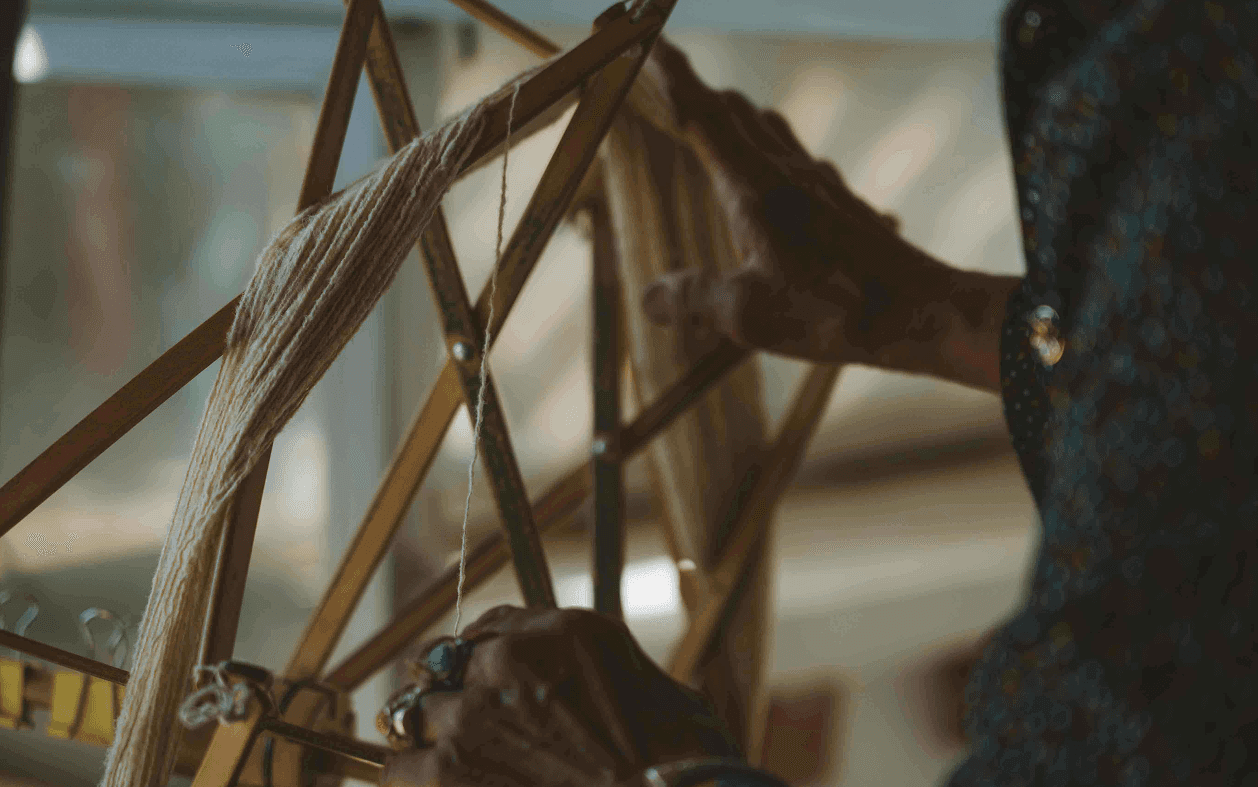
From raw fiber to finished yarn, the process relies not on industrial machinery, but on skilled hand-spinning shaped by experience and patience.
We work with fibers in their natural state, each stage is designed to preserve the integrity, texture, and character of the fiber, allowing it to evolve into yarn in a way that remains true to its origin.
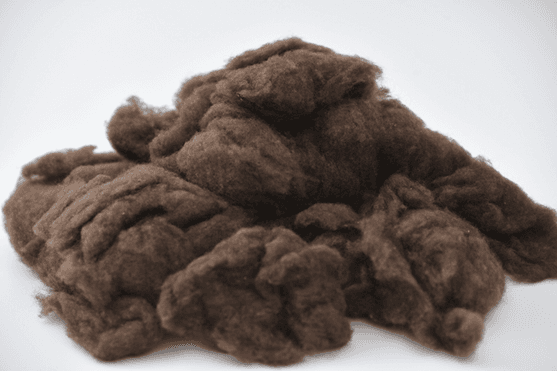
1|Fiber Collection
Primarily gathered through natural shedding, complemented by minimal shearing, to obtain fine undercoat fibers in late spring to early summer.
2|Sorting & Cleaning
Hand-selected to remove coarse fibers, while eliminating dust and plant debris.
3|Initial Grading
Classified according to natural fineness and original color.
4|Gentle Washing
Carefully washed with warm water to remove oils and impurities, avoiding agitation to preserve fiber integrity.
5|Natural Drying
Laid flat to air dry, away from direct sunlight, allowing the fibers to regain their loft and lightness.
6|Opening & Aligning
Fibers are opened and aligned by hand and with carding tools, ensuring consistency and enabling natural color blending.
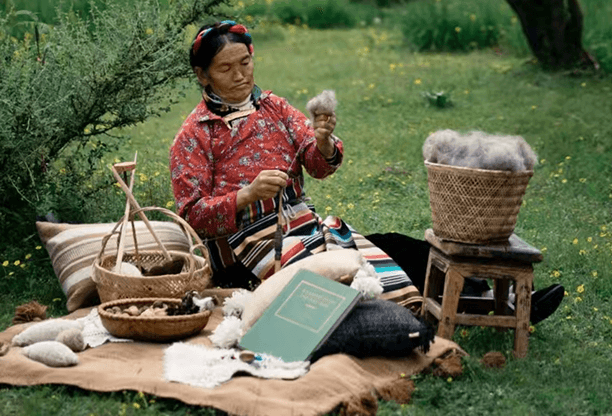
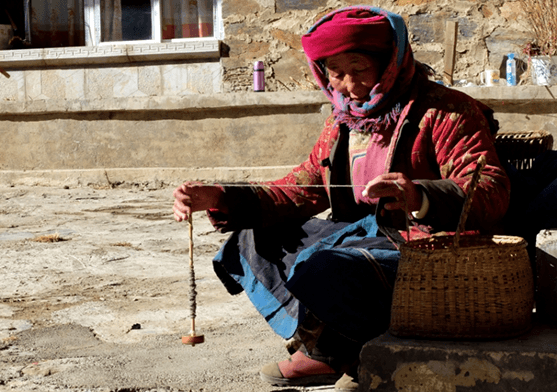
7|Hand Spinning
Spun by hand using fingers and traditional tools, through repeated drafting and twisting to form the yarn.
8|Plying
Multiple strands are twisted together in reverse to increase strength and reduce fuzz.
9|Finishing
Stabilized through steaming and gentle washing, then naturally dried to achieve the final yarn.
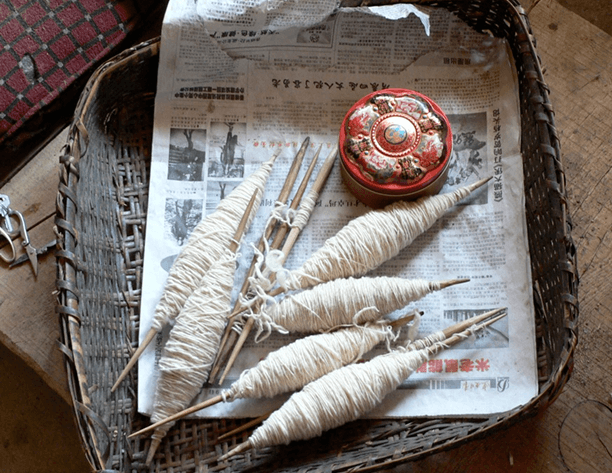
Each step reflects a balance between material and hand. We regard this craftsmanship as a form of respect for the material itself, allowing natural fibers to become a connection — linking the plateau landscape, traditional techniques, and the strength and memory carried by Tibetan women in their daily work.